
Best Pillow for Vertigo: How the Right Support Can Reduce Dizziness and Improve Sleep. Vertigo can make even simple daily activities feel overwhelming, and nighttime is often one of the hardest moments for people dealing with dizziness and balance problems. Many sufferers notice that symptoms become worse when lying down, turning over in bed, or waking up too quickly. Choosing the best pillow for vertigo can make a meaningful difference in sleep quality, comfort, and overall symptom management.
A supportive pillow helps maintain proper head and neck alignment, reduces unnecessary movement during sleep, and may minimize pressure on the inner ear and cervical spine. While a pillow cannot cure vertigo, the right design can help reduce triggers that contribute to dizziness and discomfort.
Why Pillow Choice Matters for Vertigo

Vertigo is commonly associated with conditions affecting the inner ear, such as benign paroxysmal positional vertigo (BPPV), vestibular disorders, or neck-related tension. Sleeping posture can significantly influence these symptoms.
A poor-quality pillow may:
- Force the neck into an awkward angle
- Increase muscle tension
- Causes frequent tossing and turning
- Trigger dizziness when changing positions
- Reduce sleep quality and recovery
The best pillow for vertigo should provide stable, consistent support that keeps the spine aligned while limiting sudden head movements during sleep.
Features to Look for in the Best Pillow for Vertigo
Not all pillows are suitable for people experiencing dizziness or balance issues. Certain features are especially important when choosing a pillow for vertigo relief.
A Quick Buying Checklist
- Medium loft (not too high or too flat)
- Good neck support
- Minimal shifting during the night
- Breathable materials
- Matches your sleeping position
- Replace every 1–3 years if support declines
1. Proper Neck Support
Neck alignment plays a major role in reducing tension and preventing positional discomfort. A pillow that supports the neck’s natural curve may help reduce strain and improve sleeping posture.
Memory foam and cervical pillows are often recommended because they contour to the shape of the head and neck without collapsing overnight.
2. Medium Loft Height
Extremely high or flat pillows can place the neck at unnatural angles. A medium-loft pillow generally works best because it supports the head evenly while maintaining spinal alignment.
The ideal height depends on the sleeping position:
- Side sleepers usually need a slightly higher pillow
- Back sleepers benefit from moderate elevation
- Stomach sleeping is generally discouraged for vertigo sufferers
3. Pressure Relief
Vertigo symptoms can worsen when muscles in the neck and shoulders become tense. Pressure-relieving materials such as memory foam or latex can help reduce discomfort and encourage deeper rest.
4. Motion Stability
People with vertigo are often sensitive to movement. Pillows that shift excessively during the night may increase discomfort. Dense memory foam pillows provide more stability than soft fiber-filled alternatives.
5. Breathable Materials
Overheating can interrupt sleep and increase nighttime discomfort. Cooling gel memory foam, bamboo covers, and breathable fabrics help maintain comfort throughout the night.
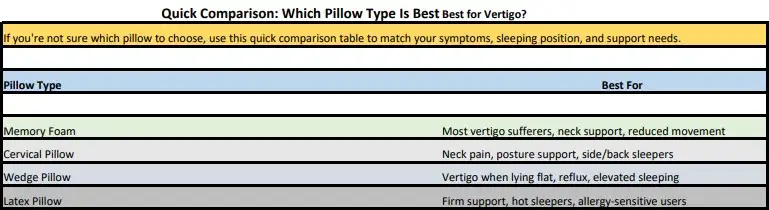
Quick Comparison: Which Pillow Type Is Best for Vertigo?
If you’re not sure which pillow to choose, use this quick comparison table to match your symptoms, sleeping position, and support needs.
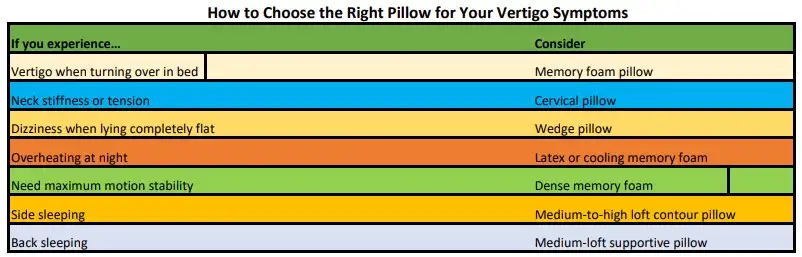
How to Choose the Right Pillow for Your Vertigo Symptoms?
Top Picks by Situation
*Best Overall for Vertigo
Cooling Memory Foam Pillow
Great balance of neck support, pressure relief, and motion stability.
*Best for Neck-Related Dizziness
Adjustable Cervical Pillow
Helps maintain the neck’s natural curve.
*Best for Vertigo When Lying Flat
Adjustable Wedge Pillow
Provides gentle elevation for the upper body. “If dizziness is triggered when lying completely flat, you may also find this guide helpful: Vertigo When Lying Down | What It Means and What to Do
*Best for Hot Sleepers
Natural Latex Pillow
Breathable, supportive, and holds its shape well.
A Quick Buying Checklist
- Medium loft (not too high or too flat)
- Good neck support
- Minimal shifting during the night
- Breathable materials
- Matches your sleeping position
- Replace every 1–3 years if support declines
Best Types of Pillows for Vertigo
Several pillow styles are commonly recommended for individuals managing vertigo symptoms.
Memory Foam Pillows

Memory foam pillows are among the most popular choices because they mold to the head and neck while maintaining consistent support. They reduce pressure points and help stabilize sleeping posture.
Benefits include:
- Excellent neck alignment
- Reduced motion during sleep
- Long-lasting support
- Comfortable contouring
These pillows are especially useful for people with neck tension linked to dizziness.
Recommended Memory Foam Pillows: “SUPA MODERN Cooling Pillow.” They are crafted with CERTIPUR US-certified shredded memory foam—exceptional resilience, contouring support. SUPA MODERN shredded memory foam pillow retains its shape and stays fluffy. The cool pillows are Risk-less and high-quality. Ideal practical sleep gift for women and men.
Cervical Pillows
Cervical pillows are specifically designed to support the neck’s natural curve. They often feature a contoured shape with raised edges and a center depression for the head.

This design may help reduce strain on the cervical spine, which can contribute to dizziness in some individuals.
Recommended Cervical Pillows: Ultra Pain Relief Cooling Pillow for Neck Support, Adjustable Cervical Pillow: Cozy Sleeping, Odorless Ergonomic Contour Pillows, Orthopedic Bed Pillow for Side Back Stomach Sleeper.
Wedge Pillows

Some people with vertigo experience relief when sleeping with a slight elevation. Wedge pillows gently raise the upper body, helping reduce positional dizziness and acid reflux, which can sometimes worsen symptoms.
A wedge pillow can be useful for back sleepers who feel dizzy when lying completely flat.
Recommended Wedge Pillows:
The Bedluxe 10-in-1 Adjustable Bed Wedge Pillow Set is a versatile option for people with vertigo who may sleep more comfortably with gentle elevation and customizable support. Its three-piece, dual-layer memory foam design can be arranged to support the head, neck, back, knees, or legs, helping you find a stable, comfortable position for rest, reading, or recovery. The foldable design and washable cover add practical convenience for everyday use.
Latex Pillows

Latex pillows offer firmer support than traditional down or polyester pillows. They maintain shape well and provide stable support without sinking too deeply.
Natural latex is also breathable and resistant to dust mites, making it a good option for allergy-sensitive sleepers.
Recommended Latex Pillows: This natural Talalay latex pillow offers responsive, contouring support with a cool, breathable feel—ideal for sleepers who prefer a pillow that holds its shape without frequent fluffing. Available in high or low loft options, it can help you choose a more comfortable head-and-neck position based on your sleep style. Its moisture-wicking cotton cover and hypoallergenic materials add an extra layer of comfort for a cleaner, cooler night’s sleep.
Sleeping Positions and Vertigo
Your sleeping position can affect the severity of vertigo symptoms. Combining the correct posture with the right pillow may improve comfort considerably.
Back Sleeping
Back sleeping is often considered the best position for vertigo sufferers because it keeps the head and spine aligned. A medium-loft pillow works best to prevent excessive neck bending.
Side Sleeping
Side sleeping can also be comfortable if the pillow fills the space between the shoulder and neck properly. A supportive contour pillow may help maintain alignment.
Avoid Stomach Sleeping
Stomach sleeping forces the neck into a rotated position for extended periods, which may increase dizziness and neck strain. Most experts recommend avoiding this position if you experience vertigo.
Additional Tips for Managing Vertigo at Night
Using the best pillow for vertigo is only one part of improving sleep comfort. Other helpful strategies include:
- Move slowly when lying down or getting up
- Keep the head slightly elevated
- Stay hydrated throughout the day
- Reduce screen time before bed
- Practice relaxation exercises to reduce tension
- Follow treatment recommendations from a healthcare provider
Some people also benefit from vestibular therapy exercises prescribed by a medical professional.
How Often Should You Replace Your Pillow?
An old pillow may lose its shape and support, making vertigo symptoms worse over time. Most high-quality pillows should be replaced every 1 to 3 years, depending on the material and usage.
Signs it may be time for a new pillow include:
- Flattening or sagging
- Neck pain upon waking
- Increased nighttime dizziness
- Lumps or uneven support
Maintaining proper support is essential for consistent sleep quality.
You may also read about:
🌀 How to Stop Vertigo Immediately at Home | Step-by-Step
7 Natural Ways to Stop Vertigo Fast
Final Thoughts
Finding the best pillow for vertigo can significantly improve sleep comfort and help reduce nighttime dizziness. Supportive materials such as memory foam, latex, and cervical contour designs are often the most effective choices because they promote proper neck alignment and minimize unnecessary movement.
While no pillow can completely eliminate vertigo, the right option may help reduce triggers, improve rest, and support better overall well-being. Choosing a pillow that matches your sleeping position, comfort preferences, and support needs can make a noticeable difference in managing vertigo symptoms naturally.


5 Responses