
The 7 Chakras Explained: Meaning, Colors, Locations, and How to Balance Them
The 7 chakras are energy centers in the body that originate from ancient Indian spiritual traditions, particularly yoga and meditation. The word chakra comes from Sanskrit and translates to “wheel” or “spinning energy.” In the chakra system, these energy centers are believed to regulate physical, emotional, and spiritual well-being.
Each chakra has a specific location in the body, color, symbolic meaning, and energetic function. When the chakras are balanced and aligned, energy flows freely through the body. However, when chakras become blocked or imbalanced, it may lead to emotional stress, lack of clarity, or physical discomfort.
Understanding the 7 chakras and their meanings can help people improve mindfulness, emotional balance, and spiritual awareness. Below is a detailed guide explaining each chakra, its location, color, purpose, and common methods used for chakra healing and balancing.
Understanding the 7 Chakras
What Are the 7 Chakras?
The seven chakras are aligned along the spine, starting at the base and moving upward to the crown of the head. Each chakra corresponds to certain emotional states, organs, and spiritual
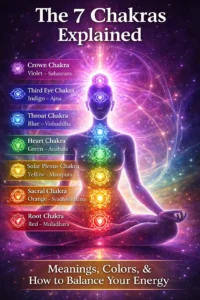
qualities.
The seven chakras are:
- Root Chakra (Muladhara)
- Sacral Chakra (Svadhisthana)
- Solar Plexus Chakra (Manipura)
- Heart Chakra (Anahata)
- Throat Chakra (Vishuddha)
- Third Eye Chakra (Ajna)
- Crown Chakra (Sahasrara)
Together, they form the chakra energy system, which many yoga and meditation traditions believe supports overall wellness and self-awareness.
1. Root Chakra (Muladhara)
Location: Base of the spine
Color: Red
Element: Earth
The Root Chakra, known as Muladhara, is the first chakra and represents the foundation of the chakra system. It is responsible for feelings of safety, stability, and grounding.
This chakra is closely linked to basic survival needs such as shelter, food, and security. When the root chakra is balanced, people often feel stable, confident, and secure in their environment.
Signs of Root Chakra Balance
- Feeling grounded and stable
- Confidence in meeting basic needs
- Strong sense of security
Signs of Root Chakra Blockage
- Anxiety or fear
- Financial stress
- Feeling disconnected or unstable
Root Chakra Healing Practices
- Grounding meditation
- Walking in nature
- Yoga poses focusing on the legs and feet
Balancing the root chakra is often considered the first step in chakra healing, as it supports the rest of the chakra system.
2. Sacral Chakra (Svadhisthana)
Location: Lower abdomen below the navel
Color: Orange
Element: Water
The Sacral Chakra governs creativity, emotional expression, pleasure, and relationships. Known as Svadhisthana, this chakra influences how people experience joy and emotional connection.
When balanced, this chakra encourages creativity, passion, and healthy emotional expression.
Signs of Sacral Chakra Balance
- Healthy emotional expression
- Creativity and inspiration
- Positive relationships
Signs of Sacral Chakra Blockage
- Emotional numbness
- Lack of creativity
- Difficulty forming relationships
Sacral Chakra Healing Practices
- Creative activities such as art or music
- Dance and fluid movement exercises
- Meditation focused on emotional release
This chakra plays an important role in creative energy and emotional well-being.
3. Solar Plexus Chakra (Manipura)
Location: Upper abdomen near the stomach
Color: Yellow
Element: Fire
The Solar Plexus Chakra, or Manipura, is the center of confidence, personal power, and self-esteem.
This chakra influences motivation, discipline, and decision-making. When the solar plexus chakra is balanced, people feel empowered and capable of achieving their goals.
Signs of Solar Plexus Chakra Balance
- Strong self-confidence
- Clear sense of direction
- Motivation and determination
Signs of Solar Plexus Chakra Blockage
- Low self-esteem
- Difficulty making decisions
- Feeling powerless
Solar Plexus Chakra Healing Practices
- Core-strengthening yoga poses
- Goal-setting exercises
- Confidence-building activities
The solar plexus chakra is often associated with inner strength and personal transformation.
4. Heart Chakra (Anahata)
Location: Center of the chest
Color: Green
Element: Air
The Heart Chakra, known as Anahata, is the center of love, compassion, empathy, and emotional balance.
This chakra connects the lower physical chakras with the upper spiritual chakras. When the heart chakra is open and balanced, individuals can give and receive love freely.
Signs of Heart Chakra Balance
- Compassion toward others
- Healthy relationships
- Emotional openness
Signs of Heart Chakra Blockage
- Difficulty trusting others
- Emotional isolation
- Feelings of resentment
Heart Chakra Healing Practices
- Gratitude exercises
- Loving-kindness meditation
- Acts of kindness and forgiveness
The heart chakra is often considered the emotional center of the chakra system.
5. Throat Chakra (Vishuddha)
Location: Throat
Color: Blue
Element: Ether (space)
The Throat Chakra, called Vishuddha, governs communication, truth, and self-expression.
When this chakra is balanced, individuals can speak honestly and communicate their thoughts clearly.
Signs of Throat Chakra Balance
- Honest communication
- Ability to express ideas clearly
- Strong listening skills
Signs of Throat Chakra Blockage
- Fear of speaking up
- Difficulty expressing emotions
- Shyness in communication
Throat Chakra Healing Practices
- Singing or chanting
- Journaling thoughts and emotions
- Practicing open conversations
The throat chakra plays a major role in authentic communication and personal truth.
6. Third Eye Chakra (Ajna)
Location: Between the eyebrows
Color: Indigo
The Third Eye Chakra, or Ajna, is associated with intuition, perception, and inner wisdom.
This chakra is often linked with insight and the ability to see beyond surface-level experiences.
Signs of Third Eye Chakra Balance
- Strong intuition
- Mental clarity
- Self-awareness
Signs of Third Eye Chakra Blockage

- Lack of direction
- Difficulty trusting intuition
- Mental confusion
Third Eye Chakra Healing Practices
- Meditation and mindfulness
- Visualization exercises
- Quiet reflection
The third eye chakra is closely associated with intuition and spiritual insight.
7. Crown Chakra (Sahasrara)
Location: Top of the head
Color: Violet or white
The Crown Chakra, called Sahasrara, represents spiritual connection, higher consciousness, and enlightenment.
This chakra is believed to connect individuals with universal awareness and deeper meaning in life.
Signs of Crown Chakra Balance
- Sense of purpose
- Spiritual awareness
- Inner peace
Signs of Crown Chakra Blockage
- Feeling disconnected from spirituality
- Lack of meaning or direction
- Closed-minded thinking
Crown Chakra Healing Practices
- Meditation
- Mindfulness practices
- Spiritual reflection
The crown chakra is often seen as the gateway to higher consciousness and spiritual awakening.
How to Balance the 7 Chakras
Balancing the chakras involves practices that encourage energy flow and emotional harmony.
Common chakra balancing techniques include:
- Yoga and meditation
- Breathwork
- Visualization exercises
- Sound healing or chanting
- Spending time in nature
Many people use the chakra system as a personal growth framework to better understand their emotions, relationships, and spiritual path.
Final Thoughts on the Chakra System
The 7 chakra system provides a powerful framework for understanding the connection between mind, body, and spirit. Each chakra represents a different aspect of human experience—from survival and creativity to love, communication, and spiritual awareness.
While chakras originate from ancient spiritual traditions rather than modern medical science, millions of people around the world use this system to support mindfulness, meditation, and holistic wellness practices.
By learning about the meaning of the 7 chakras, individuals can gain insight into their emotional patterns, cultivate balance, and develop a deeper sense of self-awareness.


One Response